
Conservation Strategy Fund (CSF), in partnership with Conservation International Brazil (CI-Brasil) and Brazil’s Ministry of Environment and Climate Change (MMA), supported the development of a Concept Note submitted to the Green Climate Fund (GCF) to mobilize resources for a national bioeconomy program led by Brazil’s National Secretariat for Bioeconomy.
Guided by Brazil’s National Bioeconomy Strategy, the initiative sought to strengthen socio-bioeconomy activities that combine the sustainable use of biodiversity with income generation, social inclusion, climate mitigation and adaptation, and territorial development. A particular focus was placed on creating the enabling conditions needed to strengthen local value chains and productive arrangements involving Indigenous Peoples, traditional communities, family farmers, and other local actors.
As part of this work, CSF developed and applied a multicriteria analysis methodology to support territorial prioritization for the implementation and consolidation of Socio-Bioeconomy Development Hubs (Núcleos de Desenvolvimento da Sociobioeconomia). The methodology integrated socioeconomic, environmental, institutional, and climate-related data to assess the different conditions shaping the potential for socio-bioeconomy development across Brazil.
The analysis was applied across Brazil’s six biomes: the Amazon, Cerrado, Caatinga, Atlantic Forest, Pantanal, and Pampa. It revealed how environmental, productive, and community governance dynamics vary across different contexts. By identifying which dimensions are most relevant in each biome, the analysis provided an evidence-based foundation for territorial prioritization and for guiding public policies, investments, and socio-bioeconomy initiatives.
_
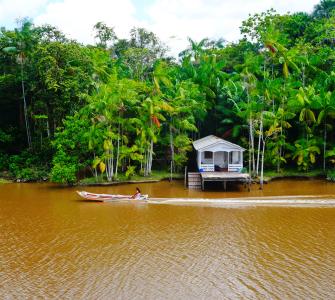
Photo: Shutterstock.