We launch a new edition of the course “Economics and Finance for Environmental Leadership” for professionals across Latin America
During the week of April 6, 2026, we launched a new edition—fully online and in Spanish—of our course Economics and Finance for Environmental Leadership, delivered through our training platform, the Numbers for Nature Institute.
The course aims to strengthen the capacities of Spanish-speaking professionals through the use of economic and financial tools applied to nature conservation. Throughout the program, participants engage with topics such as economic fundamentals, the drivers of natural resource degradation, ecosystem services valuation, conservation finance, cost-benefit analysis, environmental policy design and evaluation, and behavioral economics applied to decision-making.
Over the course of 12 weeks, these topics are delivered through 7 academic modules designed for professionals working in conservation and sustainable natural resource management, including those from the public sector, civil society organizations, private companies, and representatives of Indigenous Peoples. The course structure allows participants to balance their professional responsibilities while engaging in the program through a combination of pre-recorded lectures, live sessions with experts, updated readings, discussions, and practical exercises.
This year, we welcome a diverse cohort of 49 professionals from 10 countries across Latin America, with a predominantly female participation (80%). This group brings together a wide range of experiences, perspectives, and contexts, enriching collective learning and strengthening a regional network of professionals committed to integrating economics into environmental decision-making.
Participants’ expectations reflect a strong interest in applying these tools in their professional contexts. As one participant shared at the beginning of the course:
“I hope to acquire economic and financial tools that will allow me to make environmentally responsible decisions, as well as develop the skills to lead sustainable projects that generate positive economic and environmental impact.”
Arianna Peraza, ICAFE, Costa Rica
This perspective is complemented by a strong emphasis on practical application, as highlighted by another participant:
“I hope to learn practical tools that will help me improve my work, especially in nature conservation and sustainable development. I am particularly interested in better understanding cost-benefit analysis, ecosystem services valuation, and financing options, as these can greatly enhance how we design and evaluate projects.”
Eduardo Castro, Fundación Banco Ambiental, Costa Rica
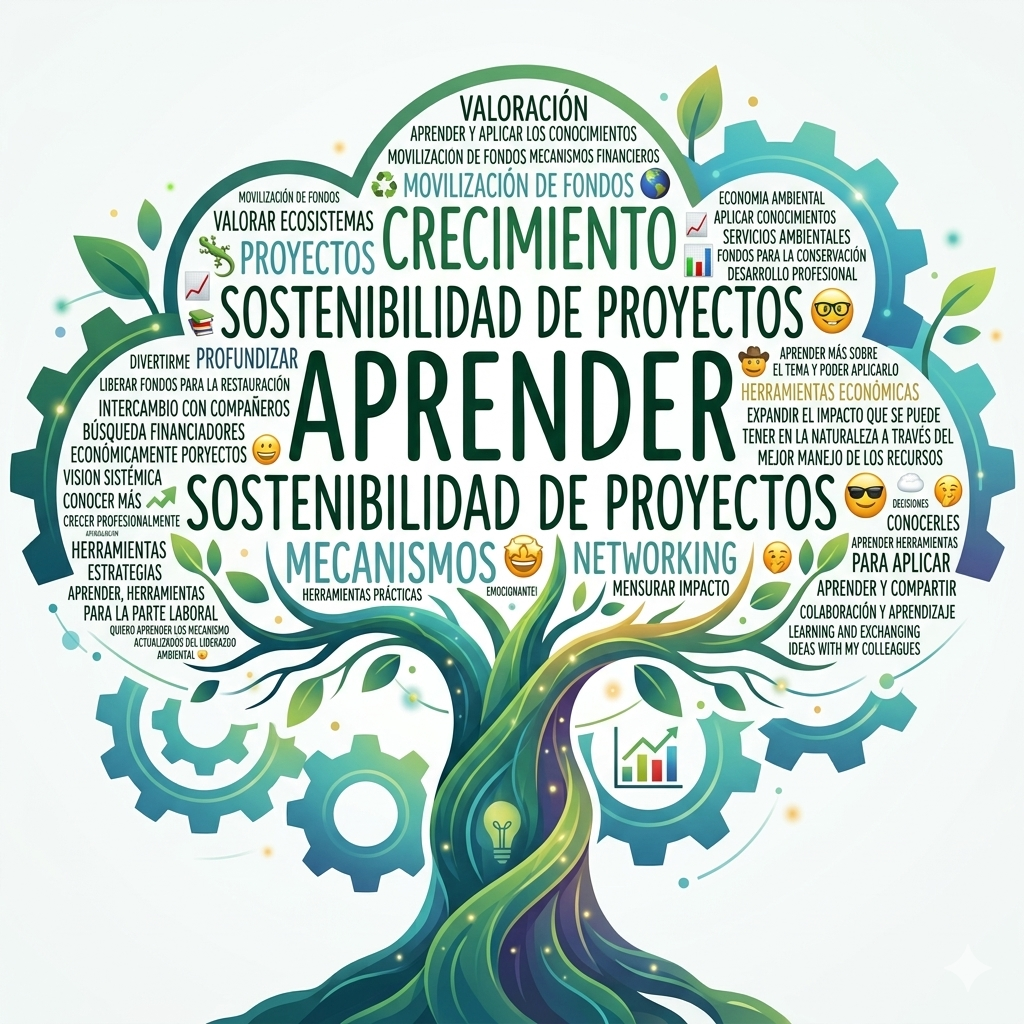
Throughout the course, participants will explore concrete tools to advance conservation solutions within their territories and institutions, contributing to more informed and effective decision-making.
During the first week, we also incorporate hands-on learning activities to bring these concepts to life. Through a role-playing exercise in our “potato market,” participants—taking on the roles of producers and vendors—aimed to maximize their profits while experientially internalizing core economic principles such as supply, demand, and market dynamics.
If you would like to receive information about upcoming courses or join a future cohort, please contact us at capacitaciones@conservation-strategy.org
- Log in to post comments