Alumni Spotlight: Expanding the Way We See Conservation Challenges
Juliana Echeverri wasn’t initially planning to take another course. At the time, she was working at the intersection of conservation policy and implementation, supporting the implementation of Target 3 of the Global Biodiversity Framework and helping to design a conservation finance training program for government representatives. Economics was part of the conversation, but not yet central to how she approached her work.
Then a colleague made a simple suggestion: enroll in Conservation Strategy Fund’s Economics and Finance for Environmental Leadership course. Turning that suggestion into reality changed Juliana's thinking about environmental economics .
“I wanted to strengthen my skills and deepen my understanding of economics and finance,” she recalls. “The course gave me exactly that, and more.”
Seeing the Bigger Picture
What Juliana gained from the course help shifted her perspective on how to think about environmental challenges. Rather than immediately applying a specific economic model to a single project, she found herself reconsidering decisions, trade-offs, and priorities. Economics became a way of clarifying conversations, not complicating them.
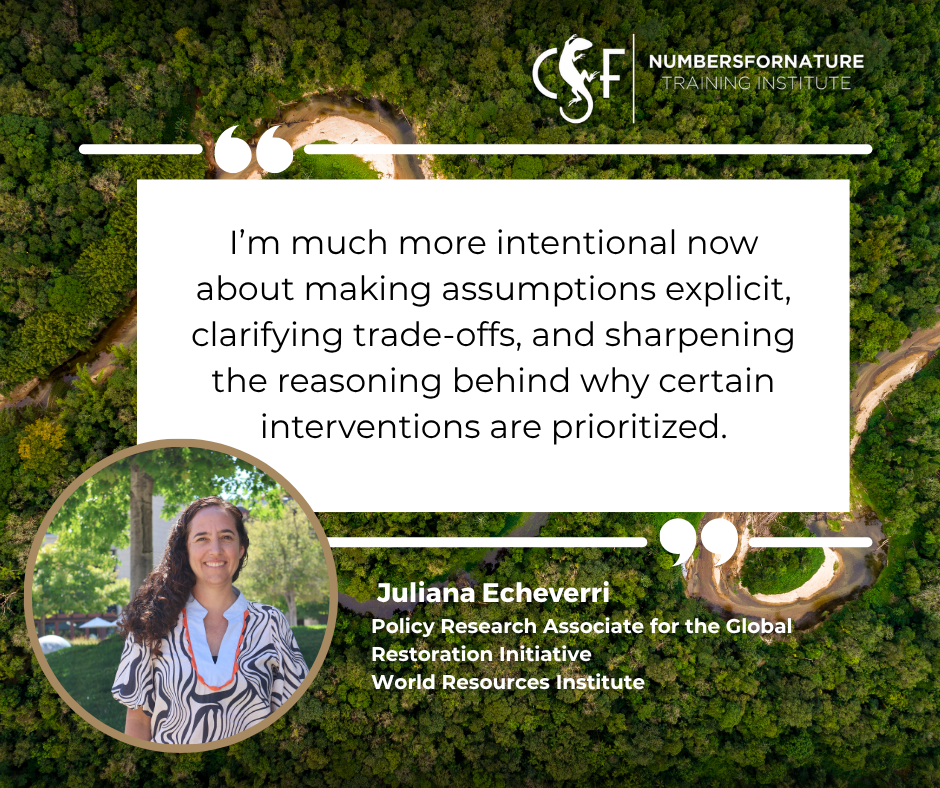
“What it really did was broaden my perspective, ampliar la mirada,” she explains. “I’m much more intentional now about making assumptions explicit, clarifying trade-offs, and sharpening the reasoning behind why certain interventions are prioritized over others.”
That mindset has proven especially valuable in her day-to-day work with partners, where decisions often hinge on feasibility, sequencing, and realistic expectations. Economics has become a lens she carries into discussions, helping align ideas with what is possible in practice.
The Human Side of Decision-Making
One of Juliana’s most lasting takeaways from this course came as an unexpected favorite: “I genuinely fell in love with behavioral economics,” she says.
Months after the course ended, she still finds herself reflecting on how people actually make decisions, shaped by incentives, norms, biases, and context rather than purely rational calculations. That insight has influenced how she thinks about environmental policy and program design, particularly where outcomes often depend on how people engage with policies or interventions.For Juliana, understanding decision-making is as critical as understanding nature. Technical solutions matter, but they only work when they align with how people engage with them and make decisions.
Where Leadership Meets Finance
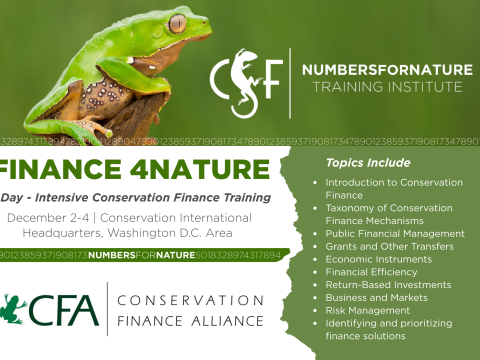
After completing the Environmental Leadership course, Juliana went on to enroll in the first cohort of CSF’s Finance for Nature intensive course. She sees the two experiences as complementary. While the leadership course strengthened her ability to collaborate, navigate complexity, and think in systems, Finance 4Nature went deeper into solutions, structures, and strategies for turning ideas into financeable solutions.
Together, they strengthened how she leads and how she communicates. One sharpened her approach to people and partnerships, the other sharpened her ability to design and explain strategies that can attract real investment.
A Portfolio Mindset
One concept Juliana expects to carry forward from Finance 4Nature is building a financing portfolio.
“There’s no one-size-fits-all solution,” she explains. “It’s about matching mechanisms to the context, the stakeholders involved, the risks, and the time horizons.”
This portfolio mindset, paired with clearer frameworks for comparing options and communicating trade-offs, has already improved how she engages with partners and funders. Even outside of formal finance roles, it has helped her frame conversations around what will work, for whom, and why.
Bringing Economics Back to Restoration
After completing the course, Juliana returned to her work with the Ecosystem Restoration Integrated Program at WRI. While she does not expect to apply conservation finance tools directly every day, the training continues to shape how she frames priorities and implementation choices.
“Understanding how financing considerations and incentives shape what’s feasible helps me communicate more clearly and make better decisions,” she reflects. “That perspective alone makes the experience incredibly valuable.”
For Juliana, these courses were not just about building technical knowledge. They were about developing a more grounded and practical way of thinking—one that connects environmental goals with how decisions are actually made and implemented.
- Log in to post comments