
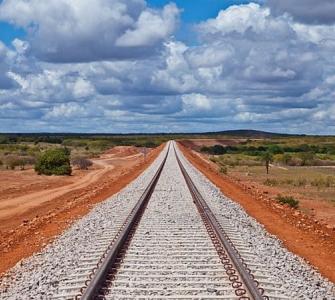
The Ferrogrão Railway (EF-170), planned to connect Sinop in Mato Grosso to Itaituba in Pará, is a major infrastructure project designed to improve the transportation of agricultural commodities from Brazil’s Center-West to northern ports. By creating a high-capacity rail corridor, the project is expected to reduce transportation costs and increase the competitiveness of agricultural exports, particularly from Mato Grosso.
At the same time, a project of this scale can generate significant environmental and social impacts. Beyond the railway’s direct footprint, its implementation may expand deforestation and influence land-use dynamics, agricultural expansion, and pressure on ecosystems and traditional territories across its area of influence.
A socioeconomic cost-benefit analysis published in 2024 assessed several expected costs, benefits, and externalities associated with Ferrogrão. While it incorporated factors such as logistics efficiency, transportation emissions, employment, road accidents, and direct vegetation loss, a subsequent critical assessment by Instituto Socioambiental (ISA) identified important methodological limitations, including the omission of relevant negative socio-environmental externalities.
CSF’s study will complement the existing cost-benefit analysis by applying an environmental valuation to identify and quantify environmental externalities associated with deforestation potentially induced by the Ferrogrão project. Rather than conducting a new comprehensive cost-benefit analysis, the work will focus on addressing part of the analytical gap identified in the existing assessment, estimating the economic value of environmental impacts linked to potential induced deforestation and translating these impacts into comparable economic terms.
The goal is to provide a more comprehensive estimate of the project’s potential environmental costs, generating evidence to complement existing assessments and support a more informed evaluation of the trade-offs involved in large-scale infrastructure investments.
_
Photo: Agência Nacional de Transportes Terrestres (ANTT)