
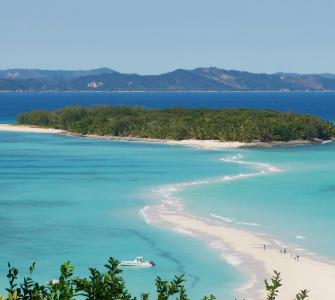
The Western Indian Ocean (WIO) is a critical ecological and economic life-support system underpinning the food security, coastal protection, and livelihoods of nearly 244 million people across ten countries. Its vibrant coral reefs, dense mangroves, and extensive seagrass meadows function as vital "natural infrastructure" for over 40 million people living directly along its coastlines.
Locally Managed Marine Areas (LMMAs) and related co-management systems have emerged as the most durable, equitable, and effective structures available to safeguard these valuable ecosystems. By putting stewardship back into the hands of local communities and Indigenous Peoples, LMMAs consistently drive higher compliance, lower enforcement costs, and prompt rapid recoveries of fish biomass.
Despite their exceptional social legitimacy and environmental performance, these models face a severe market failure: they remain chronically underfunded, receiving less than 3% of global climate finance. To bridge this gap, Conservation Strategy Fund (CSF), in partnership with the IUCN and the Conservation Finance Alliance (CFA), conducted a ground-breaking economic valuation and financial feasibility study. Our research quantifies the staggering economic returns generated by community conservation, providing decision-makers with the financial evidence required to transition from short-term project grants to long-term sustainable financing frameworks.
The Challenge: A Deep Economic Imbalance
While the ecological success of LMMAs is well-documented, a severe structural imbalance persists in how conservation costs and benefits are distributed. The natural benefits of healthy marine ecosystems accrue across local, national, and global scales — including regional fisheries support, climate regulation through blue carbon sequestration, and global biodiversity conservation.
Conversely, the burdens of conservation are borne almost exclusively by local coastal communities. Local stewards shoulder not only direct management expenses (such as maritime patrolling and ecological monitoring) but also significant opportunity costs from restricted resource extraction. Individual fishers frequently experience temporary income losses of USD 150 to USD 300 annually due to spatial zoning and no-take conservation restrictions, even while their daily actions generate thousands of dollars in global public value per hectare. This financial fragility forces communities to rely on fragmented, short-term NGO grants that are poorly suited to funding permanent, multi-decade conservation operations.
Our Approach: Economic Valuation & Strategic Design
To address this inequality, CSF and CFA deployed rigorous economic and financial analysis across target sites in Madagascar, Mozambique, Tanzania, and Kenya. The project focused on three primary components:
- Ecosystem Service Valuation: Quantifying the localized and global financial values of natural assets (mangroves, seagrasses, and coral reefs) protected by LMMAs.
- Management Benchmarking: Assessing current expenditures, funding gaps, and the accurate baseline costs required to effectively run LMMAs on a per-hectare basis.
- Sustainable Finance Architecture Feasibility: Evaluating financial mechanisms and designing institutional blueprints for a dedicated regional funding instrument.
Aligned with the IUCN's Great Blue Wall initiative, the final step translated these highly technical findings into accessible communication and advocacy tools to help local networks influence regional funders, national ministries, and international donors.
Key Findings & Economic Insights
- Staggering Returns on Investment: CSF's economic study estimates that the natural assets protected and managed by LMMAs across these four countries generate a total annual ecosystem service value of approximately $21.2 billion (International Dollars/year).
- High-Yield Conservation: Baseline data indicates that modest investments on the order of USD 20 to USD 50 per hectare per year in LMMA management can unlock localized ecosystem benefits valued in the tens of thousands of dollars ($15,000+) per hectare annually. This implies a phenomenal, conservative Return on Investment (ROI) of 300:1.
- The Power of Blue Infrastructure: Specific ecosystem asset valuations highlight that mangrove forests provide immense multi-layered returns, including coastal defense against erosion and cyclones valued between $4,000–$9,000/ha/year, raw materials valued at $7,700/ha/year, and global climate regulation via blue carbon storage valued at $900/ha/year. Concurrently, seagrass meadows serve as a globally significant climate asset, storing up to 150 metric tons of carbon per hectare.
Strategic Recommendations
Investing in local marine stewardship is one of the most cost-effective nature and climate investments available globally. To convert this massive economic value into permanent, predictable cash flows, CSF recommends the following primary interventions:
- Establish a Regional Conservation Trust Fund (CTF): CSF and CFA propose creating a dedicated, independent regional CTF (such as a WIO LMMA Alliance Fund) to pool donor capital, minimize transaction costs, and provide predictable, multi-year support instead of relying on erratic project budgets.
- Utilize a "Country Window" Model: By designing a regional fund capable of housing distinct national programs or windows, the CTF can capture the fiduciary scale necessary to attract major international foundations and Official Development Assistance (ODA), while successfully routing funds straight to trusted national networks and grass-roots communities.
- Exceptional Capital Efficiency: An illustrative $30 million endowment earning a standard 5% return would yield $1 million annually in long-term grants. This permanent capital stream is efficient enough to support the core operational expenses of 75 to 100 LMMAs, ensuring long-term climate resilience, sustained food security, and regional ecological stability for decades to come.
By utilizing empowering economic numbers to showcase the WIO as a leading global model, this project demonstrates that local social equity, environmental protection, and economic prosperity can successfully reinforce one another.