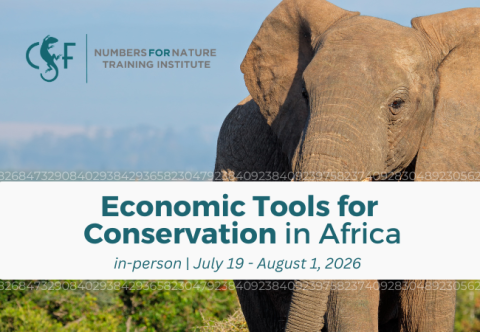
A regional version of CSF’s flagship Economics & Finance for Environmental Leadership course for Africa-based conservationists.
Since 1998, Conservation Strategy Fund’s unique and effective training program has given over 7,000 environmental professionals the economic knowledge, skills, and language to communicate effectively with decision-makers. Our courses are taught by experts who understand how economics and finance can advance environmental goals in practical, strategic ways.
Africa’s natural heritage, from its iconic wildlife to its vast rangelands and marine ecosystems, is the heartbeat of the continent’s economy. This course reframes the narrative that conservation is only a “cost”, into the more economically-sound truth that conservation initiatives can be the most cost-effective investment in a resilient future for the Continent. We provide environmental professionals with the economic knowledge and strategic language to communicate effectively with decision-makers, and prove that nature is Africa's greatest strategic investment.
We invite dedicated professionals from across the continent to join us in South Africa for two weeks of intensive learning, networking, and peer-to-peer exchange. Spots are limited. Apply to join this cohort before June 17, 2026.
The Curriculum: Regionally Rooted, Globally Informed
Our curriculum aims to level the playing field, translating complex economic concepts into accessible strategies for solving real-world challenges. This course features an expanded Conservation Finance module and additional Natural Resource Economics sessions focused on the conservation challenges facing the region today. Led by a faculty of expert African instructors and CSF senior staff, the course will include the following modules:
- Economic Fundamentals: Learn the market theory, supply, demand, and competition frameworks to understand why markets are currently inefficient when it comes to environmental protection - externalities, market failures, property rights, and public goods
- Environmental Policy: Understand how economic theory can translate into practical market-based solutions that shift incentives to support conservation and sustainable development.
- Natural Resource Economics in the African Context: Deep dive into capital theory, the time value of money and other key drivers of natural resource management decisions. This module features special sessions on critical sectors, including wildlife, agriculture, forests, and fisheries.
- Ecosystem Services and Environmental Valuation: Identify links between ecosystems services and human benefits, and how they can be translated into economic values through a range of valuation methods.
- Cost-Benefit Analysis (CBA): Learn to calculate and present "economic truths" of different development decisions in mining, energy, transportation, and more to help governments invest wisely while protecting vital ecosystems.
- Conservation Finance: Discuss global perspectives and the theoretical underpinning of finance for nature, including details on good practice guidelines and a tour of all the major types of finance mechanisms.
- Demonstrate the Value of Nature: Quantify the benefits of healthy ecosystems for local livelihoods, health, and national pride.
- Build Resilient Economies: Leverage natural resource economics to manage wildlife, fisheries, and forests in ways that ensure long-term income stability.
- Secure Sustainable Finance: Develop innovative finance solutions tailored to African contexts, including community-led carbon markets and biodiversity credits.
Due to limited space, all interested participants must submit an application to be considered for this cohort. Applications will be reviewed and accepted on a rolling basis. If accepted, you will be sent next steps to finalize your registration and submit payment. The early bird application deadline is March 24, 2026 and the final application deadline is June 17, 2026. Learn more and apply here.