
News
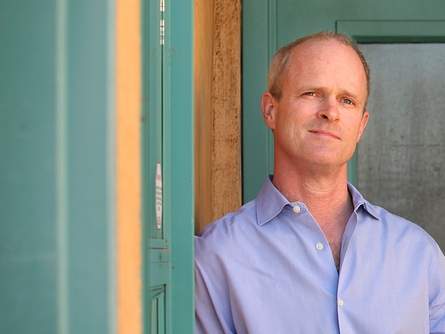
Highlighting the announcement of the MacArthur Award for Creative and Effective Institutions, the front-page article profiles the history of CSF and the importance of our work globally.
“We are recognizing organizations that are doing phenomenal work, and often under the local radar screen,” Steve Cornelius of the MacArthur Foundation said. “They have identified a niche. They have simply been the main organization working in getting these economic principles out.”
Read the article here
Image credit: Christopher Chung/The Press Democrat
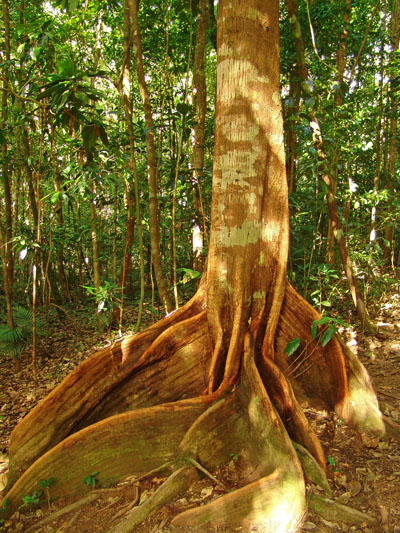
Today the John D. and Catherine T. MacArthur Foundation named Conservation Strategy Fund as a recipient of the MacArthur Award for Creative and Effective Institutions. The award recognizes CSF’s innovative work using economics to conserve the world’s most important ecosystems and provides us with a grant of $750,000. The MacArthur Award honors and supports our efforts to creatively address the the loss of unique natural ecosystems by equipping front-line environmentalists with skills to calculate and economic costs and benefits of solutions and thereby come up with answers that will actually work.
The Southern Tropical Andes, comprised of areas of Ecuador, Peru, and Bolivia, is the most biodiverse region in the world. The Tropical Andes are split into northern and southern zones, divided by a valley that runs roughly along the Ecuador-Peru border in the northern region of Peru. This valley, known as the Marañon Gap or Huancabamba Depression, rests at a lower altitude than the northern area of the Tropical Andes, creating a well-defined, unique microclimate conducive to habitation for the many endemic plants and animals in the region. This biodiversity hotspot was named the “global epicenter of biodiversity” according to the Critical Ecosystem Partnership Fund. The Tropical Andes holds about 45,000 plant species, 20,000 of which are endemic, as well as 1,500 endemic vertebrates.
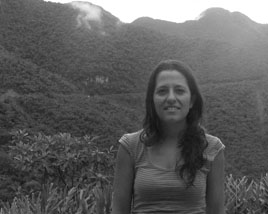
As CSF's new BUILD Program Operations Manager, Irene Burgués Arrea has found herself traveling all over the world in order to promote biodiversity conservation through infrastructure best practices. From her native country of Costa Rica, to the forest of Uganda (with stops in Bolivia and Brazil in between), Irene is jumping right in.
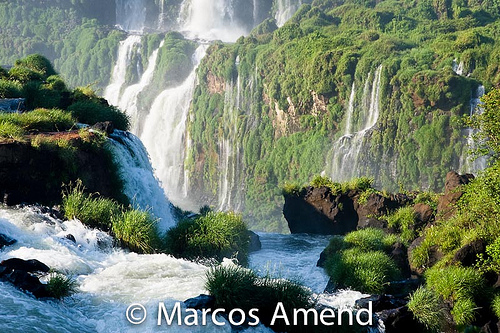
CSF has now helped to conserve more than 20 million acres of flourishing ecosystems. That's a big jump from our past reckonings and due largely to the role our Brazilian team has played in slowing badly planned roads and supporting investment in protected areas and indigenous lands. CSF's success centers on reinforcing the efforts of countless local advocates, park managers and scientists on the front lines of conservation and development decisions, giving them a solid economic rationale and strategy for conservation in the face of looming threats.
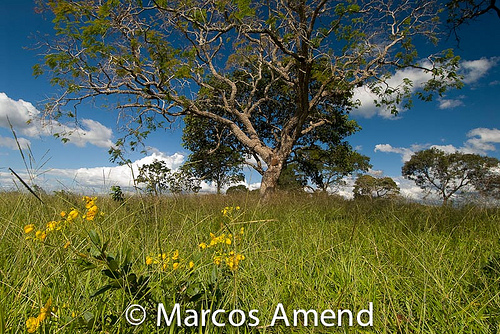
In early December, CSF’s Marcos Amend delivered economics know-how to students in the Professional Masters for Protected Area Managers program run by INPA (National Institute for Amazon Research). The program's objective is to train managers to face the challenges of protected areas management in Amazon region. This is the second time CSF has contributed to the program, which was founded by CSF course graduate Rita Mesquita.

An hour drive from Kampala lies the Mabira Forest, one of the few remaining natural forest reserves in Uganda. Rich in biological diversity, the forest contributes to the livelihood of the adjacent communities and provides an opportunity for ecotourism. In 2009 the Sugar Corporation of Uganda Limited (SCOUL) requested permission from the government to use part of the Mabira Central Forest Reserve for sugarcane growing. CSF graduate Ronald Kaggwa took action. An environmental economist at the Uganda National Environmental Management Authority (NEMA), Ronald conducted an economic analysis to prove that the net benefits of conservation far outweighed those of sugarcane.
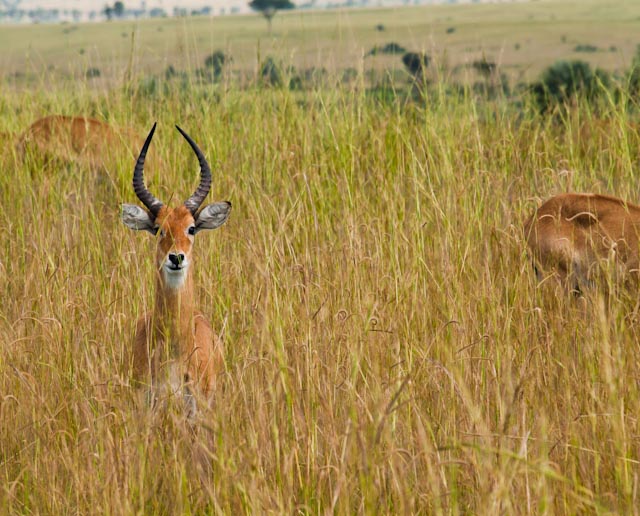
CSF's Irene Burgués and John Reid traveled to Uganda in November to establish our first long-term program in Africa. The program's initial focus will be on conserving ecosystems in the context of major infrastructure development in the Albertine Rift region shared by Uganda, Rwanda, Democratic Republic of Congo and Tanzania. The region is home to cloud forests, lowland rain forests and savannas, along with active volcanoes and endangered wildlife such as the mountain gorillas. CSF will work with government and NGOs to minimize the impact of new roads, dams and oil on these fragile resources. We are fortunate to have the partnership of the Uganda National Environmental Management Authority (NEMA) as we begin this process.
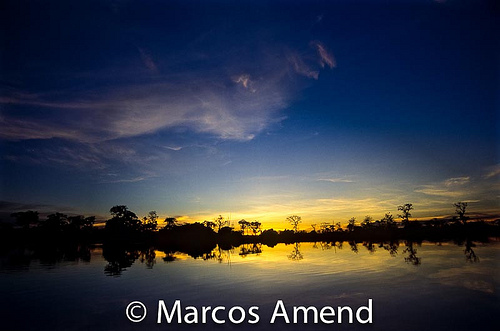
Solving our global climate crisis hinges on doing a number of things right. One is slowing - eventually stopping - deforestation, which now accounts for 15-20% of global greenhouse gas emissions. To do that we need to know how much stopping deforestation costs and where on the Earth's vast tropical belt it can be done most cost-effectively. With the support of the Gordon and Betty Moore Foundation, CSF has designed an "opportunity cost" analysis method that will work at the level of individual farms and single land uses and be scalable up to the level of entire regions. To read more about this project and test the model yourself, please click here.
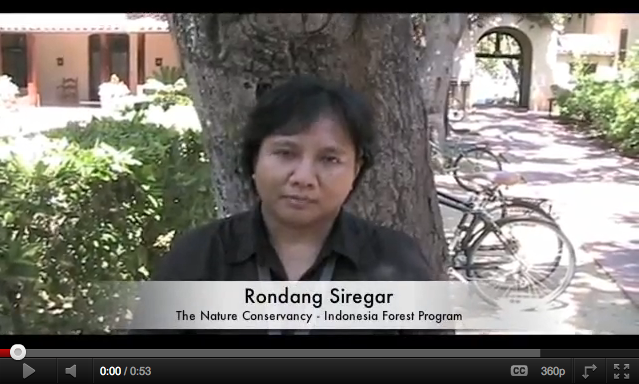
Rondang Siregar is an Indonesian biologist whose passion is protecting the wild orangutans of her native country. She recently attended CSF’s 13th annual Economic Tools for Conservation course at Stanford University where she and 27 other conservationists from around the world gathered to learn how economic tools could help them succeed. Watch the video below to hear Rondang explain how CSF’s economic training, combined with her skills as a biologist, could help her protect these noble and endangered apes.