
Opinion: The Quiet Revolution the Headlines Are Missing
While Washington is canceling wind farms, the rest of the world is busy buying them.
In 2025, global energy-transition investment reached $2.3 trillion. Renewable energy drew $386 billion in the first half of 2025, up 10% year on year. Solar generation grew by about 30% year on year, and renewables overtook coal in global electricity generation for the first time in a century. China added nearly 500 GW of renewable capacity in one year. India's capacity additions jumped 60%. The EU added 85 GW.
This is not a story about environmentalists winning an argument. This is a story about economics.
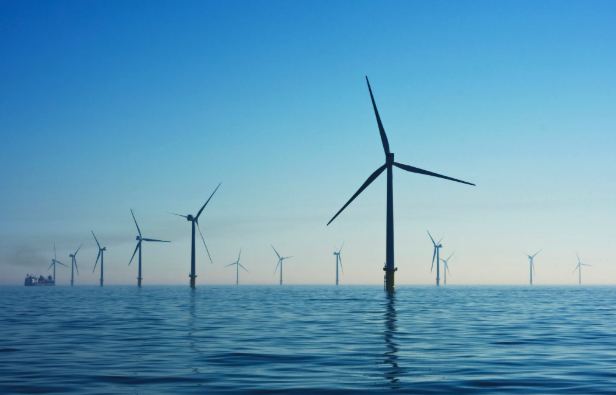
The economics have flipped, and it is happening under the radar
Lazard's 2025 LCOE+ report found utility-scale solar and onshore wind to be the lowest-cost unsubsidized new-build power sources in the United States. Not the cheapest "clean" electricity. The cheapest electricity, period. Onshore wind comes in at $37 to $86 per Mwh. Utility-scale solar runs $38 to $78. New gas peaker plants cost $149 to $251. Even before you account for externalities like air pollution, water use, public health costs, or the geopolitical premium of fossil fuel dependence, renewables already win on the economics.
This is why utilities, sovereign wealth funds, pension funds, and the largest companies on Earth are signing renewable contracts at a record pace. While there has been a slight dip in growth in 2026, the trend for the last decade is clear - it is going up. Bloomberg found that Meta, Amazon, Google, and Microsoft accounted for 49% of global corporate clean PPA volumes in 2025. They are not doing this to save the polar bears. They are doing this because they need reliable, predictable, low-cost electricity to run data centers, and renewables paired with cheaper storage now deliver it.
The hedge nobody talks about
Every barrel of oil and every cubic meter of gas is a contract with geopolitical risk. The Strait of Hormuz. Russian pipelines. OPEC quotas. Sanctions. War. The volatility of fossil fuel prices is well known, and until we have peace in the Middle East, it is here to stay. A solar panel in Spain or a wind turbine in Iowa, by contrast, has a fuel cost of zero, forever. The fuel cannot be embargoed, hijacked, or weaponized.
The IEA’s reporting is clear: roughly 70% of the increased clean energy spending over the past five years came from net fossil fuel importers. Europe accelerated after Russia invaded Ukraine. China is racing to reduce reliance on imported oil and gas. Pakistan imported 19 GW of Chinese solar in a single year, equivalent to roughly half its grid capacity. Even Saudi Arabia signed a 2.6 GW solar deal last year.
When the Saudis are hedging against oil, that should make the headlines.
The paradox
Here is what struck me, and what I think we as conservationists need to say more loudly. The largest energy build-out in human history is happening right now, driven not by climate idealism but by capital allocation, corporate procurement, and energy security. Yet the dominant political narrative in the U.S. and several other countries treats renewables as a culture-war target rather than an economic asset class.
Lately the press has been covering Trump and politics. It does not cover the capital flows. True, the Trump administration's stop-work order on Orsted's Revolution Wind farm got headlines. EU renewable investment rose 63% while U.S. investment fell 36%. That is not ideology. That is capital following risk-adjusted returns.
Countries that step back from renewables right now are not protecting their economies. They are handing China, India, and the EU a structural cost advantage in the industries that will define the next fifty years.
What this means for the conservation community
Those of us who work in conservation have spent decades making the moral and ecological case for clean energy and thus clean air and water. That case still matters. But we have undersold the economic one, and the result is that the loudest voices in the room frame this as ideology versus jobs, when the actual data show the opposite.
We should be saying clearly that renewables are not a sacrifice. They are the cheapest form of energy on the planet. Investing in them is not virtue. It is portfolio risk management. Domestic policy that punishes renewables is not pro-business. It is anti-competitive. And every developing country that locks itself into imported gas and oil instead of building domestic solar is taking on currency risk, debt-service risk, and geopolitical risk that a panel and a battery would eliminate.
The market has already made up its mind. The vast majority of new generating capacity dollars globally is flowing to renewables. The only real question is whether the countries now turning their backs on renewables — the U.S., Argentina, Indonesia, and a handful of others — want to participate in that build-out or watch it from the sidelines..
I know which side the money is on. The press should start telling that story.
This article was AI-assisted.
_______________________________________________________________
Sources
$2.3 trillion energy transition investment, 70% of clean energy spending from net fossil importers, Pakistan 19 GW solar imports, vast majority of new capacity going to renewables: International Energy Agency, World Energy Investment 2025. https://www.iea.org/reports/world-energy-investment-2025/executive-summary
$386 billion H1 2025 renewable investment up 10%, Saudi Masdar-KEPCO 2.6 GW deal, Orsted Revolution Wind stop-work order, EU investment up 63% / U.S. down 36%: BloombergNEF, 2H 2025 Renewable Energy Investment Tracker, August 2025. https://about.bnef.com/insights/clean-energy/global-renewable-energy-investment-reaches-new-record-as-investors-reassess-risks/
Solar generation grew about 30% year on year, renewables overtook coal globally for the first time in a century, battery costs fell 45% in 2025: Ember, Global Electricity Review 2026. https://ember-energy.org/latest-insights/global-electricity-review-2026/
China 500 GW renewable additions, India capacity additions up 60%, EU added 85 GW in 2025: International Energy Agency Global Energy Review, reported in GreentechLead, May 2026. https://greentechlead.com/renewable-energy/solar-and-wind-break-records-in-2025-as-china-eu-and-india-lead-global-renewable-growth-53158
Utility-scale solar and onshore wind as lowest-cost unsubsidized new-build power in the U.S.; LCOE ranges (onshore wind $37–86/MWh, utility-scale solar $38–78/MWh, gas peakers $149–251/MWh): Lazard, Levelized Cost of Energy+ Report, 18th edition, June 2025. https://www.lazard.com/research-insights/levelized-cost-of-energyplus-lcoeplus/ (full PDF: https://www.lazard.com/media/uounhon4/lazards-lcoeplus-june-2025.pdf)
Big Tech (Meta, Amazon, Google, Microsoft) accounted for 49% of global corporate clean PPA volumes in 2025; co-located solar and storage averaged $57/MWh: BloombergNEF, 1H 2026 Corporate Energy Market Outlook, February 2026. https://about.bnef.com/insights/clean-energy/corporate-clean-energy-buying-fell-in-2025-after-nearly-a-decade-of-growth/
- Log in to post comments